Home » BURN FUEL BETTER | Reviewed By KIRKUS INDIE
HEAR FROM THE BOOK EXPERTS
In partnership with Bookside Press
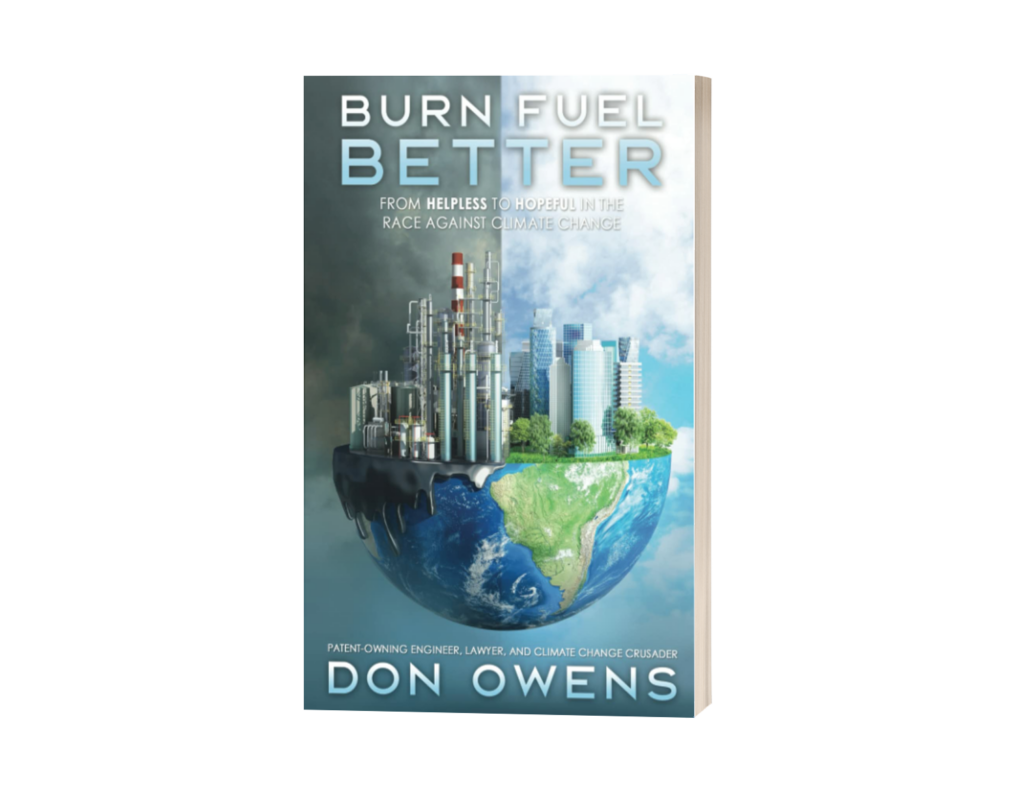
BURN FUEL BETTER
Don Owens
Reviewed by: KIRKUS REVIEWS
Owens offers a climate-change primer that doubles as an inventor’s origin story.
The author initially sets out to educate readers about the significance of black carbon, a byproduct of fossil fuel combustion that he argues is a major contributor to climate change. He also presents a solution-focused argument: Rather than waiting decades for a complete transition away from fossil fuels, humanity should focus on improving how existing fuels are burned through hydrogen-powered technologies, such as his LeefH2 technology, which he says reduces harmful emissions. He also asserts that environmental progress and economic growth need not be opposing goals; instead, he suggests that widespread adoption of fuel-optimization technologies could create new industries, jobs, and other financial opportunities. As in other climate-change treatises, he also emphasizes humanity’s shared responsibility for contributing to the crisis and urges readers, governments, and industries to move beyond political divisions to address the problem collectively. Later chapters shift into Owens’ personal history, tracing his path from a curious child and lifelong tinkerer to an engineer, patent lawyer, entrepreneur, and inventor. What began as his attempt to improve fuel efficiency evolved into years of experimentation with hydrogen technology. Eventually, Owens discovered that his invention’s most significant potential could lie not in increasing fuel economy, but in proactively reducing particulate matter emissions. These later memoiristic sections provide the book’s most compelling material, offering an accessible account of the persistence, setbacks, and unexpected discoveries involved in developing new tech. However, although the book presents a passionate case for LeefH2’s potential, its broader claims about climate solutions, economic impact, and global implementation lack supporting evidence. Repeated calls for personal responsibility and collective action reinforce the author’s central message, but they often revisit familiar points without adding new insight. Likewise, the author’s frequent references to political figures and ideological divisions feel more rhetorical than substantive. The result is a work that’s strongest when it focuses on the author’s own journey as an inventor and weakest when it expands into sweeping arguments about the future of energy and climate policy.
An impassioned but highly subjective examination of black carbon’s role in climate change.