Polar Hole: Light In Europe’s Clouds | Reviewed By Christina Avina for Hollywood Book Reviews
Home » Polar Hole: Light In Europe’s Clouds | Reviewed By Christina Avina for Hollywood Book Reviews
HEAR FROM THE BOOK EXPERTS
In partnership with Bookside Press
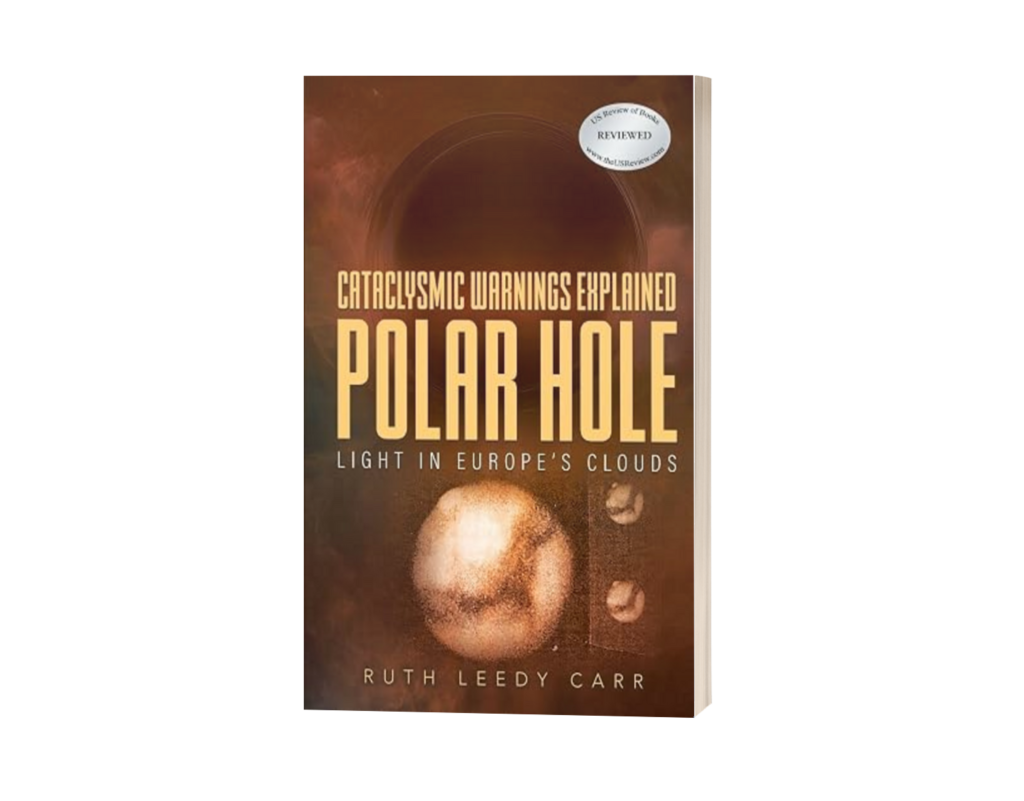
Polar Hole: Light In Europe’s Clouds
Ruth Leedy Carr
Reviewed by: Christina Avina, Hollywood Book Reviews
One of science’s most fascinating aspects, one that has always captured humanity’s attention, is how their understanding of the Universe and the world around them evolves. As new technologies emerge and people’s minds come together to explore previously inaccessible areas of science, they help not only understand the greater Universe but also push the boundaries of what’s known, so what was once unknown can one day become part of the known.
Merging various ways of exploring scientific study is crucial to author Ruth Leedy Carr’s Polar Hole: Light In Europe’s Clouds. The book takes a broad look at the Hollow Earth theory, the concept of water, and what scientists believed were polar ice caps found on the dark side of Mars. How understanding the possibility of a hollow earth situation on Mars could help humanity prepare and better understand the possibility of natural disasters in cataclysms related to hollow earth disasters. Drawing on the work of Isaac Asimov and Carl Sagan, as well as other thinkers and scientific approaches, the book is a rich journey through astrology and scientific theory that helps the reader better appreciate and understand the universe around them.
This is a rich and dynamic non-fiction read. The depth of detail the author includes in each chapter is astonishing, given the book’s fast pacing and shorter page count, and it is a true testament to the author’s deep understanding and curiosity about these topics. The book does a great job of balancing scientific theory with rich history and dynamic scientific studies. One particularly interesting chapter was how the author delved into Isaac Asimov’s predictions of a hollow-earth cataclysm and broke down unique words and phrases from Asimov’s work to unravel some of the mysteries surrounding this theory.
Readers who enjoy non-fiction books, especially those involving astronomy and science, will thoroughly enjoy this book. The compelling arguments and use of well-known scientists and philosophical thinkers help highlight the theory. It is remarkable to see the possibilities of this theory come to life on the pages. The author also does a great job using photographic evidence from various sources on both Earth and Mars to help solidify this theory. One of the book’s final chapters is the most compelling, exploring why it has been so difficult to provide evidence of the hollow theory and the various scientists and philosophers, as well as explorers who have fought to try and reach the far north and the exact spot where the poles align to determine if this theory could possibly be true.